Infernal Devices

This week my aforementioned Olde Fashioned Colde Virus morphed into Ye Devil’s Sinusitis and then progressed merrily on into Thine Ear Infectione o’Doom. 

Not much work was done on the book this week — my writing time was 100% staring at the screen while miserably pressing a cold compress onto my face and counting the hours until my next dose of antibiotics. Oh, wait — at least 30% of that time was spent making mincemeat out of many, many boxes of Kleenex.  All of Friday was devoted to harassing a doctor into giving me stronger medicine (she did.  As she put it, “it looks like you have a giant blister on your eardrum”).  Owwwwww.

The best thing to do, I figured, was to spend time reading about people who were infinitely more miserable than I was, and so out of my mass of wallowing self-pity I turned to Dante’s Inferno.  It’s simply impossible to feel bad about constant ringing ear pain when reading about being buried alive with 1,000 Arch-Heretics in a flaming red-hot coffin.

I’ll admit that my desire to Inferno-ize myself was also owing to running into one of my old literature profs. at the grocery store (he remembered my name, which is stunning) and feeling residual guilt at not having read Inferno as thoroughly as I was supposed to for class.  Also, I heard about the new video game based on the poem, and found it both intriguingly bizarre and unintentionally hilarious.

In the game, Dante Alighieri is a scythe-wielding ex-Crusader who engages in hand-to-hand combat with Marc Antony and Cleopatra at the end of Level 3.  (Hear that? It’s the sound of hundreds of Dantean scholars all spitting out their rose hip tea at the same time.) 

Oh oh oh — and Beatrice is also in hell, because Satan wants to make her his bride.  Thus effectively giving one of the greatest epic poems in world literature essentially the same plot as Super Mario Bros.

May I add that Super Karamazov Bros. would also make for an awesome video game?  Especially if it took the steampunk route . . .

Anyway, I’ve much more to write regarding Inferno, but I’ll save it for further posts (if I can scrounge up the time).  I’m really enjoying this read, it’s much more enjoyable than when I read it as a harried undergraduate.  I’m in Canto XVI right now — Seventh Circle, Third Ring, Second Zone, if you’re interested.  Thank goodness for the map in the back of the book.

Dancin’ Man

This winter, teachers from the Tanner creative dance program came to Jeffrey’s school to teach his class some moves.  He absolutely adored it; the teachers always brought along a pianist or percussionist, so the kids could move to live music, and they created dances based on words and language. 

Two weeks ago they put on a performance for parents, and I was able to film a bit of it.  Jeffrey, unfortunately, was just as interested in chewing on the ties of his sweatpants as he was in dancing.  My friend, Heather, was also there an said she didn’t notice the pants-chewing at all, but admitted that if she were Jeffrey’s mom, it would take all her willpower not to leap into the performance and yank the thing out of his mouth.  Amen.

That said, this is the most adorable gangly dance I’ve seen in a while:

If you’re wondering why there is a kid in the background with a red mohawk, it was also Silly Hair Day at the school.  Earlier that same day, I had volunteered in Jeff’s classroom, and the boys who hadn’t dyed their hair were all obsessed with running their heads under the water fountain so they could “spike” themselves.  Geez, boys.

Favorite Reads of 2009: Fiction

Yeah, I know.  Finally.

After about a zillion kick-in-the-pants reminders from my friends, I’ve gotten around to creating my list of favorite fiction for young readers from 2009.  Take note: this is not a list of the best” fiction, or the most critically acclaimed, or the most award-winning.  There are plenty of lists around the board where one can find such things already.  My list is of personal favorites, and personal favorites only.  What books do I wish I owned, or wish I had written?  That’s what these are. 

Yes, that means lots of glaring omissions, most notably When You Reach Me.  I’ve got no beef with When You Reach Me, but I feel as if it’s gotten all the accolades it needs, and adding it to this list seems kind of like gilding the lily at this point.  (As if I had any guild to start with.)

I also have to say that if you are a parent, please please please review these books before handing them to your child.  Everybody has different tastes and standards where kids’ reading is concerned. 

Now, Here We Go!
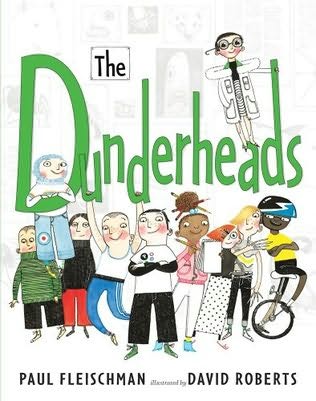
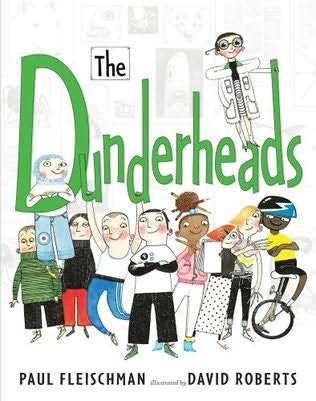
Best Picture Book Writing of the Year: The Dunderheads by Paul Fleischman, illus. David Robers.  OKAY, OKAY.  I know this is supposed to be  a list of novels, but I had this on my list of Best Picture Books and completely forgot to type it in!  But if you’ve missed this suave lil’ gem of a picture book, pick it up right away.  This classroom caper is a glorious mishmash of Ocean’s Eleven and Miss Nelson is Missing! with some of the tightest storytelling you can fit in 52 pages.  A soon-to-be-classic.  (All ages)

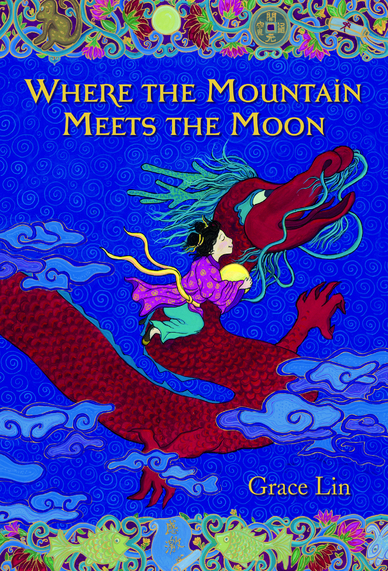
Favorite Read-Aloud: Where the Mountain Meets the Moon by Grace Lin.  I’ve been touting Lin’s novels as superior fare for the elementary school set for ages, and it looks like the Newbery Committee finally got on my side this year.  This beautiful, old-fashioned adventure tale takes its setting and inspiration from Chinese folktales, and Lin’s story of a spunky girl out to seek her fortunes with the help of magic goldfish, talking dragons, and tiger-fighting twins is somehting that belongs on every child’s bookshelf.  (All Ages)
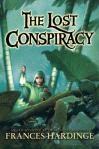
For Those Who Like Their Plots Thick, and the Worldbuildng Thicker: The Lost Conspiracy by Francis Hardinge — Sentient volcanoes!  Exotic killer beetles!  Assassins that dye their skin blue with the ashes of their victims!  This has been touted as the fantasy novel of the year, and I’m not inclined to disagree.  Taking cues from Maori and Pacific Islander cultures, Hardinge has crafted one of the most satisfyingly complex fantasy cultures I’ve ever encountered.  As a bonus, the story is thick with intrigue, has a clever heroine who evolves from a beleaguered underdog to spirited leader, and one of the creepiest bad guys this side of Simon Legree.  (Ages 12)
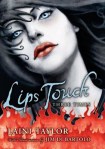
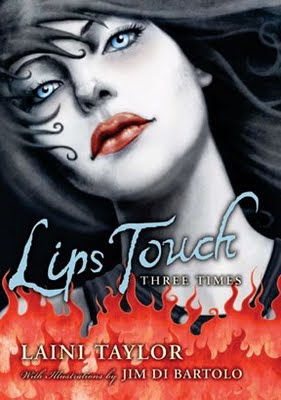
Romance Done Right: Lips Touch: Three Times by Laini Taylor.  In these three fantastical tales (two short stories and one novella), Taylor explores budding romance and everything a first kiss can mean: not just love, but betrayal, temptation, and salvation.  The stories borrow motifs from traditional folklore — babies cursed at birth, children kidnapped by fairies, young ladies perishing from poisoned fruit — and uses it to stunning effect, drawing out the elemental, enriching darkness of fairy tales and giving them new life.   Her prose reads like a colorful exotic costume discovered in an attic trunk; it’s just lovely.  As a bonus, the first story draws on Christina Rossetti’s beloved poem “Goblin Market” for inspiration.  Gotta love that.  (Age 12+)
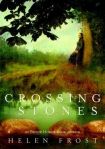
Historical Fiction That Won’t Kill You: Crossing Stones by Helen Frost.  It can be difficult to sell a historical novel to a kid when it’s 300+ pages long.  TA-TA-TA-TWAAAA!  Helen Frost to the rescue!  Her succinct story of two families who grow and change during World War I and the suffragette movement is told in a series of poems narrated by the different characters.  Clever readers will notice that the form and shape of the poems reflects the personalities of the characters.  Regardless, it’s easy to get swept away by Frosts’ clear, succinct imagery, knowing period references, and characterizations so keen that you fall in love with them with just a few lines.  (Age 12+)
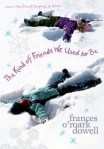
 

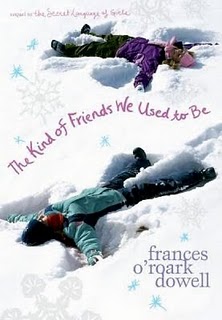
The Book I Wish I Had Read When I Was Twelve: The Kind of Friends We Used to Be by Frances O’Roark Dowell.  There are many, many books that tell the story of the Good Book-Loving Girl and the Mean Best Friend Who Rejects Her After Getting on the Cheerleading Squad.  O’Roark Dowell takes this premise and transforms it: hey, cheerleaders are people too, and just because your best friend has developed different interests from you, it doesn’t mean you can’t still work at being friends.  The tone of the writing is so spot-on middle school and clever that I wish I had a highlighter pen to score all the quotable lines.  Oh, and did I mention that the protagonist wears black boots and listens to Joni Mitchell?  SCORE!  (Age 9-13)
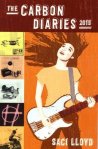
Most Terrifying Book of the Year: The Carbon Diaries 2015 by Saci Lloyd.  It’s Bridget Jones’ Diary – meets – An Inconvenient Truth, as a middle-class London teen recounts the trials and tribulations of Britain’s efforts to cut back national carbon emissions by 60%.  When a series of floods threatens to destroy civilization and make such rationing pointless, it’s almost enough to make you cower under the bed with a box of compact flourescent lightbulbs, but Lloyd seasons her story with enough glorious humor to make the book as touching as it is terrifying.  The scene where Dad trades in mum’s Saab for a horse, cart, and pig is worth the price of admission alone.  My only complaint: 2015?!?  C’mon, don’t we have a little more time before the end of the world?  (Age 14+)
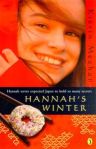
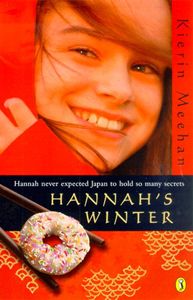
For the Aspiring World Traveler: Hannah’s Winter by Kierin Meehan.  When Hannah, an Australian girl, is sent to spend the winter as an exchange student in Japan, she is thrilled by the prospect of adventure, but soon finds that her hosts’ house is haunted by an ancient samauri, and requires her to solve an ancient mystery to be rid of it.  What makes this story more fun than spooky is its overwhelming love of the oddities of foreign travel: the Bean Throwing Festival!  A suit of armor that emits colored smoke!  Donuts filled with green tea ice cream!  Someone send me a dozen of those, pronto.  (Age 10+)

For When You Feel the Need to Wield Some Axes: Heroes of the Valley by Jonathan Stroud.  There’s nothing like the classic combination of Vikings and snark to keep a reader happy.  Stroud uses both to masterful effect here, giving us the tale of black-sheep-of-the-royal-family Halli and his adventures between a dozen or more warring clans . . . which he has mostly “accidentally” angered himself.  A funny, exciting tale about family, destiny, and whether or not you should believe stories about man-eating trolls in the mountains.  (Age 12+)
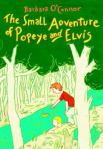
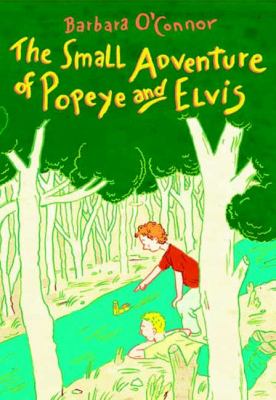
Best Summer Story: The Small Adventure of Popeye and Elvis by Barbara O’Connor.  What’s a kid to do when he’s alone for the summer in the deep forest of the Deep South with nobody but his strict grandmother and deadbeat uncle for company?  When a rickety RV with a six-kid family gets stuck in the mud nearby, Popeye sees it as his best chance for excitement. When a series of small boats keep mysteriously appearing in the creek nearby, he and his new friends find a perfect adventure.  In the hands of any other writer, this book’s setting (rural impoverished South) would be the makings for high drama, but O’Connor keeps it refreshingly light and honest.  And funny.  Did I mention the funny?  (Ages 7-9)
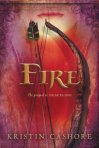
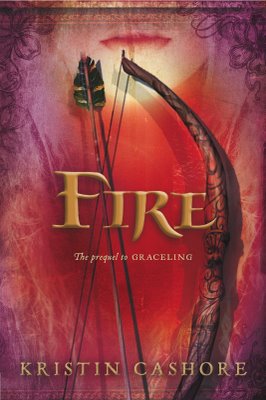
Doing it Old School!  Fire by Kristin Cashore.  A prequel to last year’s hit fantasy novel, Graceling, this tale continues Cashore’s penchant for strong characters, a very old-fashioned fantasy setting, and the trials and tribulations of a girl so beautiful that men literally throw themselves on their swords for her.  The fact that she can also control minds makes for a very interesting shades-of-grey morality story.  I’d also like to give points to Cashore for Fire’s father, Cansrel, who with his silver-blue hair, party-boy ways, and habit of collecting exotic animals, makes him the glammest fantasy character I’ve ever run across.  (P.S. I’ve no idea what “doing it old school” really means.)  (Age 15+)
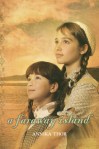
A Swedish Import So Lovely it Puts IKEA to Shame: A Faraway Island by Annika Thor.  I’ve described this book before as “Anne of Green Gables – meets – Number the Stars,” and I stand by that.  This book — the first in a bestselling, beloved series from Sweden — is the story of sisters, two Jewish girls from Vienna who are evacuated by their parents on the eve of World War II to live with foster parents on a tiny island off the coast of Sweden.  Times are tough, especially for older sister Stephie, who finds it difficult to make friends, worries for her left-behind parents, and whose foster parents are dead ringers for Matthew and Marilla Cuthbert.  But eventually, she comes to find home.  Thor teases out lovely details — the traditions and festivals of the islanders are especially sweet — and is wise enough to make her characters uncomfortably complex: the villagers are kind but also bigoted; Stephie has a well-meaning schoolmate who gives her a picture of Hitler as means of lessening her homesickness (whoops).  I can only hope that American publishers continue to bring the remaining books in this series to our shores.

Best Reissue: The Serial Garden: The Complete Armitage Family Stories by Joan Aiken.  From the author of the beloved Wolves of Willoughby Chase comes a set of charmingly loopy fantasy stories, published in various volumes and periodicals and finally collected here.  On her honeymoon, Mrs. Armitage makes a wish that she will “never be bored with happily ever after,” and in the ensuing magical adventures, she never is: the family finds out that the kindergarten teacher is really a witch, what to do when the house has been comissioned by fussy wizards, a Christmas party in which all the children are turned into fish, how to deal with a ghostly governess, and much more.  Aiken’s style never takes itself very seriously (this is a family who, when a unicorn turns up in the garden on Tuesday morning, responds by blustering “but this usually only happens on Monday”), and the stories usually end with all problems resolved and the characters sitting down to tea.  It makes for a glorious read aloud, too.

The Top Children’s Fiction Poll

The lovely Ms. Bird at A Fuse #8 Production is undertaking the massive effort of conducting a poll of the best children’s novels of all time.  Each person is only allowed to submit his or her top ten (only ten!) and since there are far too many books that I consider The Best, I’ve decided to manipulate the scoring system and choose books that I think might need some extra points.

So: no Charlotte’s Web, no Bridge to Terabithia, no Little House in the Big Woods, and no Alice in Wonderland.  But plenty of other titles that I’m sure you’ll agree are rather wonderful.

From least to greatest:

10. Ballet Shoes by Noel Streatfeild.  I ask you:  in this day and age, where else can you find a book about a girl who performs in a ballet of A Midsummer Night’s Dream by night and is an budding mechanic and aviatrix by day?  Nowhere, that’s what.  And it’s precisely because of Petrova Fossil that this book has maintained its high levels of awesome over the years.

9. Daddy Long-Legs by Jean Webster.  Long before today’s batch of “novels with cartoons,” the world was blessed with the ficticious illustrated letters of Judy Abbot’s adventures at college, circa 1912.  Part of this novel’s lasting charm is its revelation that, in some ways, college students haven’t changed that much over the years.  For example: Judy and her friends stay up late in the dorms debating over whether or not it would be possible to swim through a pool filled with lemon-flavored Jell-O.  Add pizza and and a Che Guevara poster to that scene, and you see what I mean.

8. The Perilous Gard by Elizabeth Marie PopeIt’s the Tam Lin legend imagined as a gothic suspense tale set in Elizabethan England, complete with a secret underground cult, a Fairy Queen, and toxic super-freakouts.  Oh, and Christopher Heron, one of the most swoon-worthy fictional lads this side of Shakespeare.

7. Cheaper by the Dozen by Frank B. Gilbreth, Jr. and Ernestine Gilbreth CareyYes, it has its problematic chapters that have not aged well, but the trials and travails of the Gilbreths, their twelve children, and their glorious, glorious efficiency-expert childrearing methods still makes this one of the funniest children’s books ever written.  Oh, and did I mention that I myself am the oldest of five children?  It’s nice to have Ernestine to relate to when you discover that your little brother has put peanut butter in your hairbrush again.

6. The Secret Garden by Frances Hodgson Burnett.  Porridge and rope skipping and fountains of roses and a wild boy from the moor who can practically talk to animals!  It’s frequently touted as the “most satisfying” children’s book ever written, and you have to respect any novel that takes a traditional gothic setting (waifish orphan in deep dark mansion with mysterious wails) and morphs it into a heartwarming family story.  It’s had scads of imitators ever since, and no surprise.

5. The Phantom Tollbooth by Norton Juster.  I’d like to know how many kids developed a full-fledged love of wordplay from this book.  There’s something that makes you feel so smart and clever when reading about jumping to Confusions, literally eating your own words, and sparring wits with the Spelling Bee and Canby.  And you gotta love the Watchdog.

4. The Hero and the Crown by Robin McKinley.  Is it children’s lit. or YA?  Folks, it’s a Newbery winner.  A Newbery winner in which the heroine kills a dragon by driving her sword into its eye until she’s up to her armpit in brains.  ‘Nuff said.

3. From the Mixed-Up Files of Mrs. Basil E. Frankweiler by E. L. Konigsburg.  Ahh, yes.  The book that has warped the way I view museums forevermore.  Now when I look at rare antique furniture, I think “would that be a good place to sleep?” and fountains are often eyed as potential sources of income.  Bathrooms?  Completely and thoroughly judged for their ability to hide me from security staff.  Look at what you’ve done, Ms. Konigsburg.  Look and despair.

2. The 13 Clocks by James Thurber.  Back off, Princess Bride.  This here’s probably the original “fractured fairy tale.”   The story includes an evil Duke who sports both a glass eye, an eye patch, and a sword cane; man-eating geese; a prince-disguised-as-a-minstrel (or is it the other way ’round?); the magic roses of Princess Saralinda; and the lovable Golux with his “indescribable hat.”  Add to that a heaping helping of classic Thurberean asides (“I sent eleven guards to kill the prince.”  “But the prince is as strong as ten men.”  “So that means there will be one left to finish him off!”) and you can easily see why Neil Gaiman has declared it to be “probably the best book in the world.”

1. Anne of Green Gables by L. M. Montgomery.  Pretty much the gold standard for historical fiction with a dreamy-eyed, book-loving firebrand of a protagonist whose imagination gets her up to no good.  You can’t throw a rock into a library without hitting a host of Anne wannabes.  And it’s also possible that you can’t throw a rock into a children’s literature conference without hitting a passel of ladies who ARE Anne Shirley.  It’s not just a book, it’s a lifestyle.  Plus, I have to respect any character with a compulsive drive to emphasize the silent e at the end of her name.  (Did I mention my name was Brooke-with-an-e?)

Comparative Religion

Jeffrey and Eleanor came out of Primary (our church’s version of Sunday School) eager to show off the pictures they had made:

Eleanor’s is on top, if you couldn’t guess from the pink.  She says it’s a picture of her and Jesus holding hands.  (Awwww.)  This is the first time I’ve seen her draw hearts, so I was duly impressed.  Also note the generous bellybuttons in both figures.  Eleanor always puts bellybuttons in her pictures of people, “because,” she says, “you would look really weird if you didn’t have one.”  True that.

Jeffrey’s drawing is on the bottom.  I couldn’t figure out what it was, so I asked him for a description. 

“It’s the cycle of Jesus’ life,” he explained.  “First he was born in a temple, here,” (he pointed to the big grey building which does indeed look like a temple) “and then he spoke to Joseph Smith, who is holding a sign that says ‘REPENT REPENT REPENT.’  Then he died, and a big volcano,” (pointing to the big red triangle) “erupted and sent him off into heaven” (the cloudlike scribble).  “Then it begins all over again.”

Wow. 

Although I’m sure that Jeffrey knows that Christ was born in a manger in Bethlehem, etc. (for crying out loud, Christmas was just LAST MONTH), I would give good money to have a printout of what goes on in Jeffrey’s brain during Sharing Time.  I think he has a tendency to embellish whatever he’s learning about with his own imaginative prowess.  He’s got reincarnation, Evangelicalism, and possibly volcano worship all blended together there.  It’s rare that Jeffrey spends time drawing — he really didn’t begin making representational pictures until almost the end of kindergarten — so I was pretty excited about this.  Look at the arrows!  Cool!

Favorite Reads 2009: Picture Books

It’s that time of year again — the list-makin’ time — and I’ve read my way through nice fat piles of books to bring you some of my select favorites.  Fire up the library cards, and let’s get rollin’!

Best WordplayBubble Trouble by Margaret Mahy, illus. Polly Dunbar.  Probably some of the cleverest rhymes this side of Gilbert & Sullivan, and a rollicking tale about a town’s efforts to rescue an adorable baby floating in a bubble.  Mahy originally published this story in an anthology back in the ’80s, and it’s great to have it back.  Dunbar’s illustrations are scrumptious as always.  Fox in Socks ain’t got nothin’ on this puppy.

Best Read-Aloud for Preschoolers — The Terrible Plop by Ursula Dubosarsky, illus. Andrew Joyner.  This update on the “Chicken Little” story has got a rhyme scheme worthy of a tap-dance.  A group of not-so-bright woodland creatures are spooked into mass hysteria by a mysterious sound by the edge of a lake — until a grumpy bear demands a reasonable explanation.  Joyner’s mixed-media illustrations are both cute and chic, with a definite ’50s-retro vibe.

Best Read-Aloud for Elementary School Kids — Billy Twitters and His Blue Whale Problem by Mac Barnett, illus. Adam Rex.  All hail Adam Rex, king of comic photo-surreal illustration!  And all hail Mac Barnett, whose story allows me to use my Pirate Voice, Nerd Voice, Hippie Teacher Voice, Big Dumb Bully Voice, and Popular Girl Voice, all in one tidy package.  There’s nothing like making an outlandish parental threat (“If you act up one more time, we’re going to get you a blue whale”) and then seeing the literal results.

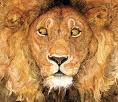
Most Likely to Win the Caldecott MedalThe Lion and the Mouse by Jerry Pinkney.  Folks, this man has Caldecott runner-ups oozing out of his ears, so it’s time.  And this is the one for the gold.  Lush, realistically depicted animals of the Serengeti star in a wordless retelling of the old Aesop fable.  If the stellar page design isn’t enough to convince you, Pinkney’s gently humorous creatures will. 

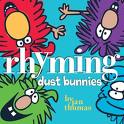
For When You Have a Big Case of the Sillies — Rhyming Dust Bunnies by Jan Thomas.  Both wacky-fun in its own right, and a sly send-up of cheerful-yet-bland easy readers, this book reads like a classic Sesame Street sketch distilled into book form.  Any book that ends with all the characters inside a vacuum cleaner gets my vote. 

Reads Like a ClassicThe Snow Day by Kamako Sakai.  Yes, the title sounds familiar, but Sakai’s quiet book is a standout for its ability to capture the quiet, indoorsy world of snowy weather.  The depiction of different kinds of light in the illustrations (sunlight, lamplight, reflected light off a snow-covered street) is masterly.  I raved a few years ago about Sakai’s previous book, Emily’s Balloon, and this one is just as good.

Most Adorable Bear of 2009 Magic Box by Katie Cleminson.  A girl jumps into a cardboard box and finds a magic hat that can grant her wishes.  Her wish for the perfect pet turns out to be a polar bear the size of a city block, followed by bunnies that play jazz music.  A slightly surreal, but goofily fun little tale that reads like your favorite childhood fantasy play.

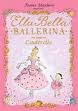
Feels Like it Was Created Via a Focus Group That Consisted Entirely of My DaughterElla Bella Ballerina Meets Cinderella by James Mayhew.  Yes, that’s really what it’s called.  It’s about a girl who finds a magic music box that transports her into fairy tales — in this case, Cinderella.  If you cut this book, it would probably bleed pink, but I say if you’re going to go down that princess road anyway, why not choose a book with good art and storytelling?  Mayhew’s fine-lined watercolors remind me of Louis Slobodkin and are just as light and spun-sugar wonderful as a real trip to the ballet.

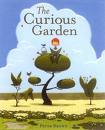
Illustrations That Make Me Covet — The Curious Garden by Peter Brown.  It’s an eco-friendly tale about a boy who transforms an abandoned railroad track into a city-wide community garden, but hidden within the modern, wonderfully detailed illustrations is a tree with a two story treehouse in it.  And that just makes me drool.

Best Fight SceneYummy! by Lucy Cousins.  Best known for her whimsical Maisy books, Cousins’ retelling of six traditional folktales (The Three Pigs, Little Red Riding Hood, The Three Bears, etc.) are gloriously faithful to the original source material.  Ergo, when the huntsman shows up to off the wolf, there’s a large “CHOP!” smeared across the page, and the wolf’s head goes a-flyin’.  Fortunately, Cousins’ intentionally childlike illustrations give the story more the feel of a Warner Bros. cartoon instead of Night of the Axe-Wielding Fairy Tale, and radiate a warmth that kids will be drawn to.  The extra-large trim size makes it dandy for reading out loud, as well.

Hipper Than Thou — A Penguin Story by Annoinette Portis.  Modern design has the occasional dabble in children’s literature, usually with obtuse, over-intellectual results (Abstract Alphabet, anyone?).  But Portis’ streamlined, frictionless illustrations not only exude ultra-mod style, but are packaged with a darn fine story as well.  Use it as the antidote for anyone who snored their way through Happy Feet.

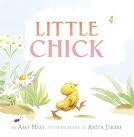
Just Makes You Wanna Say “Awwwww” — Little Chick by Amy Hest, illus. Anita Jeram.  Little Chick is given a trio of tales in this pleasingly plump volume, each one dealing with some sort of problem.  Her carrot won’t grow!  She can’t catch a star!  Leave it to her ever-wise Old Auntie to save the day, and you’ll feel as comfy and at-home as you would with a favorite quilt.  Go ahead: Awwwwwwww!

For Dog LoversAlways in Trouble by Corinne Demas.  There’s quite a few picture books with the misbehaving-dog-shapes-up-in-obedience-school story, but Demas throws in enough twists to keep readers chuckling and on their toes.  And that dog is soooo loveably mutt-ish; who can resist that big squishy nose?

Best Use of Food in a Fairy TaleThe Duchess of Whimsy by Randall de Seve, illus. Peter de Seve.  The dull-as-dust Earl of Norm wishes to woo the fabulous Duchess of Whimsy.  Many humorous adventures follow, but what I love about this book is that it ultimately proves that if you can make a really good grilled cheese sandwich, you can do anything.  Peter de Seve is one of my favorite illustrators for The New Yorker, and his talent for charmingly elastic faces and billowy, elaborate clothes are put to good use here.  Fans of King Bidgood’s in the Bathtub will approve.

A Great Gift for Grownups — All the World by Liz Garton Scanlon, illus. Marla Frazee.  It really isn’t a story, more of a poem about the simple things in life that connect everybody.  But what really elevates this book is the jaw-dropping, expansive illustrations by Frazee.  Its gorgeous images of landscapes and families, in addition to its large size, make it worthy of the coffee table as well as bedtime.

The End of the Beginning

Here’s my big dirty secret: Since late February, I have been working on a novel.  Tonight I finally — finally! — finished the first draft.

Clocking in at 420 pages, it is bad. 

It is very bad. 

But it is there

There’s a couple of continuity problems to fix, but afterwards I’m going to take some time off from it before I begin revisions.  During this time, Brian will have the thankless task of reading it and telling me which parts are good (I’m already fully aware of which parts are not).  Come January, the revisions will begin, and boy howdy.  About 120 of those pages have gotta go.

For now, however — time to boogie.  My reward for tonight is a big mug of hazelnut cocoa and Community on Hulu.  And then maybe a few rounds of my own personal happy dance.

Oh, and please don’t ask me what the book is about.  I’m going out on a big enough limb just to admit what I’ve done; I don’t need any further humiliation.  Maybe around Draft #11 . . .

Jeffrey’s First Piano Recital

tom_26_jerry-piano_concertoIn my last post, I described how Jeffrey, out of fear for the mouse that had snuck into our kitchen, had increased his piano time in the hope of scaring it away.  He was, specifically, practicing pieces for his recital, which took place this past Saturday.
And he done good!

Jeffrey had been practicing his pieces since September, and the learning had been slow.  So slow, in fact, that his teacher suggested that perhaps this year might not be the best time for his first public performance (she didn’t want him to do badly, and have a negative experience).  I was miffed at the idea, and Jeffrey was enthusastic about performing, so we cranked up the practice.

Every day for a week, Jeffrey would run through his entire performance — including the bows — about ten times. Five in the morning, five in the evening.  He had a solo called “Let’s Boogie,” followed by a duet called “It’s Natural to Have a Flat” (what is it with sheet music and the bad puns?) that we played together.  He not only had to play the pieces perfectly (er, well . . . perfectly-ish) but had to put the music on the piano himself, keep his eyes on the music instead of on his teacher, wait for me to get on stage so we could start together, etc.

A pretty tall order for any seven year old, but especially for Jeffrey.  But he took it seriously — whispering the notes of his song and air-fingering when we were in the car, stepping to the piano to play it through at odd moments.

Last Wednesday he had a group master class, during which his teacher would decide whether or not he was ready to perform.  I nibbled my nails the whole time, but Jeffrey was awesome — his music was “gourd-geous.”  (She had given him a gourd to take home.  What is it with the bad puns?!?)

On Saturday he was the very first kid performing in the program.  He marched up in his little blue sweater vest and did everything perfectly (well, perfectly-ish), and then I walked up next to him and we played together.  So much work for only two minutes of music! 

There was plenty of applause, especially from both sets of his grandparents, and as we rose to take our bow, Jeffrey reached down and wiped his nose on his vest.

That’s the first-grade touch, baby.

Good Boys Do Fine Always

For those of you who are curious, Jeffrey is indeed still slogging away with piano.

Yes, I was truly upset about his teacher’s recommendation that we take some time off, but after consulting my mother-in-law (who not only is generously funding the lessons, but has also put six children through lessons herself) I’ve decided to just keep slogging on through.

The last thing I want is to give my kid the message that two so-so weeks of lessons grants him the right to quit. 

So: we’re slogging.  The biggest obstacles Jeffrey faces, other than the usual attention-span problems, is learning the notes on the keyboard and proper fingering.  Kim, his teacher, has therefore issued flash cards and a finger exercise known as “tabletop tapping.”  We’re also reviewing many of the songs he already knows, teaching him to look at the music instead of his hands, and to hold his fingers the right way and play instead of pounding the keyboard.

After nearly two months of flashcards and table-tapping, Jeffrey has improved enough to focus on directly identifying keys on the keyboard and working on playing his review songs properly.  Every now and then I see him make a small leap, a connection — hey, when the notes on the page move upwards, it means the notes are higher! — and he’s really starting to make an effort in making a sound that is “smooth like ice cream.”

And the bribes rewards?  Those don’t hurt, either.  Jeffrey has only two or so more days until he gets enough stickers on his chart for an R2-D2 toy.  Woot.

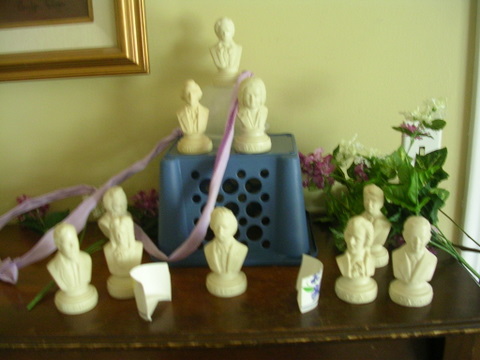
In other music-related news, a few weeks ago I found a bag of plastic busts of composers’ heads for $1 at the thrift store.  They’re kind of dated (Edward MacDowell is the lone representative of American music) but I thought they made for goofy fun.  Look — I can juggle them in the air and say they’re too hot to Handel!

Jeffrey on the other hand, was fascinated and spent a great deal of time making this on top of the piano:

 composer temple

He gathered the boxes, the flowers, and ribbon all by himself, and dubbed it the “Piano Temple.”  In case you can’t tell (it’s kind of blurry) Beethoven is at the top (the only composer Jeffrey knows).  I think the Maestro would approve.  And what is up with Bach’s friggin’ enormous head?!?  (He’s just below Beethoven on the right.)

Every Good Boy Does Fine

piano_keysThere’s an old Irish folktale about a mother who wishes for her son to play music.  She goes to talk to a druid man, who gives her a choice: he’ll give her son the gift of music if she gives up her soul.  If she gives up her body, the druid will take away any desire to play music.  The mother chooses to give her soul, and her son becomes a renowned harpist, but when she dies, she spends eternity in purgatorial agony.

I’m sure any parent who has decided to give their child music lessons can readily relate.  Gifting a child with music in exchange for soul-deadening limbo?  Been there.

For the past four months, Jeffrey has taken piano lessons.  We got a recommendation for a highly regarded teacher in the neighborhood with scads of experience, and after about three months of waiting, she was able to find a slot for Jeffrey on Tuesday afternoons.

I made the effort of waking everyone else up half an hour earlier so we can practice before school.  There was no small amount of stress surrounding this effort; Jeffrey is bright — very bright — but doesn’t necessarily have the best attention span, and he usually resists doing activities that require a great deal of discipline.  He’s also a very emotionally sensitive kid, and sometimes throws himself down into my lap after he makes a mistake at the keyboard.

It probably doesn’t help that I’m bringing my own wound-up-tight ball of concerns to practice; out of my five siblings, I’m the only one who really stuck it out with piano, studying it all the way through high school (and even, very very briefly, toying with the idea of getting a music education degree in college).  I resolved early on that I wouldn’t let my kids hissy-fit themselves out of piano lessons the way that my brothers did. 

So what do I do with my big whiner of a piano man, Jeffrey? 

For a while, it seemed as if lessons were going wonderfully — he had a few attention problems at first, but then we hit a big streak of success.  For about six weeks, I’d arrive at the end of Jeff’s lesson to find both teacher and student beaming with pride.  “Jeffrey was great today!  He wins the prize for Most Improved Attention Span!”  Early morning practice sessions were . . . well, not exactly fun, but fun-ish, full of a sense of hard-earned accomplishment.  Jeffrey put stickers on a chart to show his practice progress, and we filled up two pages’ worth.

But then something changed.  I don’t know if the advent of summer vacation caused it, but two weeks ago I picked up a rather jittery Jeffrey from lessons, and his teacher took me aside.

Perhaps it was time to stop lessons, she suggested.  Maybe we should wait a few months, or years, and then begin again.  He’s perfectly capable of playing the music; it’s more that he won’t take personal responsibility for it. 

This, in no small terms, freaked me out.  We had been doing so well, but it followed almost the exact same bell curve that Jeffrey has shown at preschool, in kindergarten, in pretty much every other endeavor he’s undertaken: rough start, some improvement, then he gives up. Or rather — so it seemed to me — his teachers give up. 

So we gave it another week’s worth of practice, and my ball of worry wound itself even tighter.  I pushed him — perhaps too hard.  We talked about following instructions and playing the piano all the time.  I knew I was talking about it too much, but somehow it kept blurting out of my mouth.  Jeffrey wailed at the keyboard, fussing and whining and sticking his toungue out at me, pushing every single one of my buttons in order to get out of practice.  I didn’t give in; one of our practice sessions lasted an hour.  Purgatory, indeed.

Needless to say, our most recent lesson is one of the worst he’s ever had.  His teacher highly recommended quitting.  “If we keep going now, piano will never be fun, never be enjoyable,” she said.  “Progress will be slow, like putting on thumbscrews.  If we wait six months, or a year, his progress will be twice as fast, and you’ll be getting your money’s worth out of the lessons.”

Quitting?

I don’t know if I can do it. 

Would it be better to give him lessons on my own, or should we wait?  Do I honestly think he’ll go “twice as fast” when he’s seven or eight?  Or will it just be more difficult?

On Wednesday evening, our ward had an ice cream social, and the Primary hosted an informal talent show.  Kids spontaneously leapt up to dance, tell jokes, or sing.  Jeffrey eagerly hopped on stage, dragging me up to play “Hot Cross Buns” –one of his favorites he’s learned so far — on a little electric keyboard.  He was nervous, hands shaking, but seemed more concerned with ordering me around than making mistakes.  We played, the audience was enthusiastic.

Jeffrey took a bow.