It’s that time of year again! The time for list-makin’!
2008 was a particularly strong year for youth literature, and I simply cannot include every single good book of the year on this list — although you will notice that it’s rather longish. My criteria and extra-scientific selection process goes something along this wise:
1. Do I frequently mentally refer to the book?
2. Do I often talk about it with everyone I meet?
2. Do I secretly wish to own a copy of the book?
If the answer to all three are “yes,” then it’s on the list. So here we go:

BEST COSTUMES: The Red Necklace by Sally Gardner. This tale of the French Revolution is a charmer — it has action, romance, magic, and clothes, clothes, clothes. There’s a character who has his flower beds replanted each day to match the color of his shoes, there’s a Greek mythology-themed costume ball, and a stylish villain who, when he isn’t making the heroine swoon, tells the time via a Grim Reaper-adorned pocket watch. If you like sweeping period romances like The Scarlet Pimpernel, then this book’s for you. Love it.
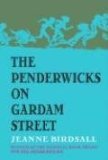 I WISH I COULD LIVE WITH THEM FOR A WHILE: The Penderwicks on Gardam Street by Jeanne Birdsall. In this funny, clever 21st-century riff on Little Women, the four Penderwicks sisters learn about truth, honor, Latin, football, cats, duckies, True Love, and melodramatic Aztecs. This is one of those rare sequels that surpasses its predecessor.
 BEST VILLAIN WITH AN INADVERTENTLY HILARIOUS NAME: Airman by Eoin Colfer. Imagine tossing Batman, The Count of Monte Cristo, and Jules Verne in a blender, and then throwing in a princess and Victorian aircraft for spice. It’s a perfect alternate-history action/adventure pageturner, but the bad guy is named Bonvilain, which propells it into the category of Awesome.
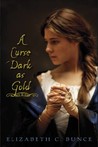 BEST RETELLING OF A FAIRY TALE: A Curse Dark as Gold by Elizabeth C. Bunce. It’s “Rumplestiltskin” reset in early 19th-century England, revolving around a mysteriously cursed wool mill. The level of suspence is up to the hilt in this baby, propelling it out of the realm of folklore into a full-bodied ghost story. Bonus points: the inclusion of British folk magic. That stuff’s always interesting.
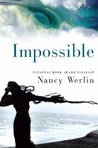 OH MY GOSH THAT SCENE WAS HOT: Impossible by Nancy Werlin. Twilight fans, take heed: if you took all four novels of that saga and boiled out all the angst, you’d end up with the taut romantic thriller that is Impossible. This tale of young adults facing down a supernatural curse and falling for each other in the process is smokin’. Oh, and it’s based on the ballad “Scarborough Fair.” Need I say more?
 MOST LIKELY TO BE MADE INTO A FILM: The Hunger Games by Suzanne Collins. A dystopian future society where teenagers are forced to fight to the death on reality TV? A fiesty young lass named Katniss is thrown into the fray with naught but her hardscrabble thirst for survival, a boy who is totally in love with her, and her mad archery skillz. Can’t wait for the sequel!
 TOTALLY IN LOVE WITH THE PROTAGONIST: The Knife of Never Letting Go by Patrick Ness. It’s science fiction with a strong literary bent. It concerns a world of men who were infected with a virus that enables them to hear each others’ thoughts. And then a series of events leads to a major war, chase across wild terrain, betrayals, love, etc. etc. Todd Hewitt is the young lad caught up in the whole mess, and his rough-shod voice is just heartbreakingly real.
 THE NOVEL IN WHICH I’D LIKE TO TAKE A VACATION: The Dragonfly Pool by Eva Ibbotson. The fictional country of Bergania, when it isn’t overrun with Nazis, is just the place I’d like to visit, if I had the chance. Young English girl Tilly takes a trip there in 1939 with a very hilarious school chums as part of a folk dance competition, and ends up befriending and rescuing Bergania’s young prince from the clutches of said Nazis. Folks, this book has everything — including a high-class cheese tasting and a Mongolian dog — and is probably my favorite historical fiction of the year.
 BEST KICK-BUTT PROTAGONIST: Graceling by Kristin Cashore. Katsa is the character I’d least like to meet in a dark alley . . . if she were a villain. This old-school fantasy tale of a girl with super-lethal superpowers is one heckuva rollercoaster ride, complete with creepy villain, a gold-jewelry-bedecked hottie of a love interest, a fight to the death with a mountain lion, and as much sword fightin’ as your heart could possibly desire.
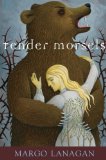 BEST RETELLING OF A FAIRY TALE, PT. 2: Tender Morsels by Margo Lanagan. Actually . . . this book was published as adult fiction in Australia. It’s a very, very dark retelling of “Snow-White and Rose-Red,” broadened and deepened in such a way that it touches on nearly every aspect of human life. Death, sex, violence, family, love, ethics, you name it, it’s here. Amazing stuff, but as a warning: the first few chapters are designed to show you the darkest aspects of human behavior, and features scenes of abuse and rape. It’s handled deftly, but you ought to know it’s there. This ain’t no Disneyfied fairy tale, but draws on the earthy fears and hopes that are the DNA of all folklore.
 FOR WHEN YOU WANT TO WEAR ALL BLACK: Skim by Mariko Tamaki, illustrated by Jillian Tamaki. Whoa, you think you were a troubled teen? Kimberly “Skim” Cameron is an overweight, half-Japanese, Wiccan, Goth, possibly lesbian, and rather depressed and lonely girl. Her reaction when a teen suicide rocks her high school is pitch-perfect in its depiction of adolsecent angst and isolation. Give this one to the Bell Jar set. Bonus points: the gorgeous illustrations for this graphic novel combine, like its heroine, both western and Japanese art styles, and made the list of the New York Times Best Illustrated books of the year.
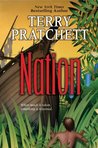 MOST LIKELY TO BE TOLD BY A RETIRED PIRATE: Nation by Terry Pratchett. In an alternate version of the 19th century, a tsunami hits a chain of South Pacific islands, leaving an island boy and a shipwrecked English girl as the only survivors. Their work to rebuild a life together leads to a tale that asks hard questions about the nature of civilization, racism, society, and much more. Oh, and it’s chock full of life-risking adventures, ghosts, sharks, supernatural wonders, and the standard brilliant Pratchett-isms. You think your life is hard? The protagonist of this book can see death. It just makes you want to sit on a tar-barrel and say “Arrrg.”
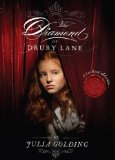 BEST SUPPORTING CAST: The Diamond of Drury Lane by Julia Golding. Yes, this tale of the intrepid spitfire Cat Royal — a foundling who inhabits the Drury Lane Theatre, circa the 1780s, is one humdinger of a mystery tale. But what makes it superb are all the secondary characters: London street thugs, aristocrats who sneak off to boxing matches, a political cartoonist known as Captain Sparkle, and — I kid you not — a former African slave who is also a violin prodigy. Bonus points: a glossary of 18th-century street slang in the back.
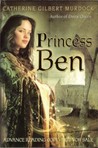 THE SEVEN HABITS OF HIGHLY EFFECTIVE PRINCESSES: Princess Ben by Catherine Gilbert Murdock. When young Benevolence, or Ben’s parents are killed by invaders, along with the king, she is next in line for the throne, and under the thumb of the imperious Queen Sophia, who is determined to turn her into a — horrors! — “proper princess.” Ben’s rebellion against this idea leads to her imprisonment in a castle tower with a secret room, in which she learns all about magic. But is her lack of interest in politics threatening her country’s stability? Ben’s development into adulthood is a fairy tale that keeps you guessing. As an added perk, it’s written in an arch 19th-century prose style, and it just beautiful.
 BEST READ-ALOUD: The 13 Clocks, by James Thurber. This is a reissue, published decades ago, but is hands-down our favorite book to read at bedtime, on vacation, when stuck in traffic, whenever. Ages before The Princess Bride poked fun at fairy tales, Thurber’s small masterpiece was doing it in high style. This book has all that is required in a good story: a princess, a prince, an evil duke, spies, enchanted treasure, and a whimsical, magical middleman called the Gollux, who wears “an indescribable hat.” Best for adults are the hilarious one-liners (“I’ve sent eleven guards to kill the prince!” “But sire, the prince is as strong as ten men!” “Well, then that leaves one guard to finish him off!”) Be sure to find the 2008 edition, which preserves Marc Simont’s gorgeous full-color illustrations.
 BEST BOOK WHOSE PLOT I CANNOT SUMMARIZE: The Adoration of Jenna Fox by Mary E. Pearson. See . . . if I say anything about the plot, it will TOTALLY ruin the reading experience for you. Let’s just say it’s one of the better depictions of an amnesia patient piecing together her life, that it’s set roughly 100 years from now, deals with bioethics, and will make you say AHHH! about halfway through. This one’s a great way to get a deep philosophical discussion about the mind/body problem.
 MOST ADORABLE NINTH GRADERS EVER: Every Soul a Star by Wendy Mass. Three teens with completely different backgrounds are drawn together under various circumstances to view a total solar eclipse. There’s brainy Ally, popular pretty-girl Bree, and artistic but withdrawn Jack. Mass stays far away from the usual stereotypes so pervasive in youth media. Bree’s popular, but she isn’t a “mean girl,” and Ally isn’t so much nerdy/socially inept as she is lonely and charmingly unself-concious. The unlikely but deep friendship that forms between the three kids is as real and magnificent as the eclipse itself — and by the way, you’ll learn scads about astronomy from this book as well. Did you know that there are Muslims who travel the world to be present at eclipses, in order to pray for the sun’s return? Cool, huh?
 COULD PROBABLY TAKE NANCY DREW DOWN IN A FIGHT: Into the Dark by Peter Abrahams. The adventures of intrepid detective Ingrid Levin-Hill continue in the third Echo Falls mystery. This time, her eccentric-but-beloved Grampy has been accused of murder. Can Ingrid clear his name? Ingrid is the kind of female protagonist I always love to see: she’s smart and talented, but also prone to the various insecurities that usually plague 13-year-olds. In other words, a real girl. Abrahams usually takes elements from familiar children’s stories to enrich his Echo Falls stories; “Hansel and Gretel” is the theme of Into the Dark, to wonderfully spine-tingling effect.
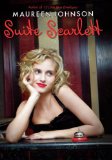 BEST FLUFFY BEACH READ: Suite Scarlett by Maureen Johnson. The Martin family runs a boutique hotel in New York City, but it’s fallen hard times — so much that the four Martin children are called upon to help keep it afloat. Scarlett is assigned to care for the elegant Empire Suite, and finds her life turned upside-down when the wealthy, eccentric “Auntie Mame”-ish Mrs. Amberson becomes her first client. What I especially liked here are the fun girly details: a crush on an aspiring actor, red Chanel lipstick, a wacky appearance on a morning television program, and the Dior dress of your dreams.
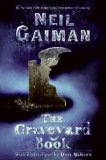
PROBABLY MY FAVORITE BOOK OF THE YEAR: The Graveyard Book by Neil Gaiman. You know how The Jungle Book is about an orphaned boy raised by animals? Well, this book is about a boy raised by ghosts in a graveyard. It seems creepy — and many parts of this book are, purposely so — but the characters are full of such warmth, humor, and personality that you can’t help but love ’em. There’s a heapin’ helpin’ of danger and excitement — you can’t help it in a book where the vampire, the mummy, and the werewolf are the good guys — as well as a dash of eye-misting pathos. Gaiman uses a variety of folkloric motifs that make the chapters especially rich and vibrant. I can’t wait for my kids to be old enough to share it with them!

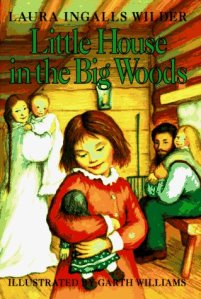 For the past two weeks, our evening storytime has taken a departure from the usual picture books and headed deep into the Big Woods — Little House in the Big Woods, to be exact. The first in Laura Ingalls Wilder’s famous “Little House” series.
 10. — Fox Went Out on a Chilly Night: An Old Song, illus. by Peter Spier. A mischievious fox. A New England farmer who waves his fist in the air at him. Gorgeous, well-researched period detail — check out the barn full of tobacco! How often do you see that in a picture book? — and a folk melody you just can’t resist. There’s always a bit of autumn snap in the air when I open this book, and by the end suddenly I crave roast goose.
  9. — Morris’ Disappearing Bag, by Rosemary Wells. Four siblings, Christmas morning. The big kids get cool presents (hockey stick, chem set, beauty kit) but little Morris is bestowed with naught but a lame-o teddy bear. When the big kids won’t play with him, Morris sulks — until he finds a forgotten present under the Christmas tree that makes everybody disappear. The fact that this book doesn’t come across as a disturbing revenge fantasy is testament to the picture-book writing prowess of early Wells. Sorry, Polar Express fans — this quiet charmer really is the ne plus ultra of Christmas books.
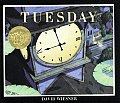 8. — Tuesday by David Wiesner. The iconic flying frogs! Ain’t nuthin’ says “good character design” like flying frogs. They whiz through the air like UFOs from a ’50s B-movie on those cute little lilypads! Creating a wordless picture book with great comic timing is more difficult than you think, and this most clever of Wiesner’s creations never fails to bring on a smile. Okay, I also admit: this book was also the one that first got me interested in contemporary children’s literature (yes, I was about fifteen at the time. Oh, and I was definitely at the top of my high school’s social pyramid, why do you ask?).
  7. — Freight Train by Donald Crews. It’s strictly 2-D, and overfloweth with white space. The text is comprised of sentence fragments. And yet, and yet . . . I’ve yet to see a toddler who doesn’t get excited to see it, a librarian who doesn’t insist on having it in her storytime bag, or a parent (me) who doesn’t get tootired of reading it repeatedly. There’s something mystifyingly Zen-ish about this book’s magical simplicity . . . if an orange box car, green cattle car, and a yellow hopper car go through a tunnel, and nobody’s around to hear it, will the two-year-old ask to hear it again? (And again and again and again . . .)
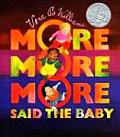 6. — More, More, More Said the Baby: Three Love Stories by Vera B. Williams. It’s almost the opposite of Freight Train in terms of design — there isn’t a speck of white anywhere in these book’s shimmering rainbow-hued pages, purposely so. It features mutiethnic families (still considered groundbreaking when it was published in 1990) and has a simple yet songlike text that nearly requires that tummies be tickled, toes nibbled, and small bodies rocked to sleep while reading it. Mmmm, said the reader. Mmm, Mmm, Mmmmm.
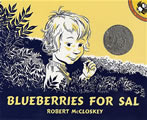 5. — Blueberries for Sal by David McCloskey. I’d like to see any illustrator today take up the challenge of producing a book with art created entirely out of blue ink, and still have it be as visually compelling and humorous as Blueberries for Sal. The story is a bit charmingly dated — if you can get your hands on a hardcover edition, check out the endpaper illustrations featuring Sal and her mother canning berries on a woodburning stove — but still as appealing to kids as ever. Even if, in reality, Sal probably would have been eaten right up by that bear.
 4. — St. George and the Dragon, retold by Margaret Hodges, illustrated by Trina Schart Hyman. This is one of those books where the spectacular illustrations tend to overshadow the text, howver high the quality may be. But let me just say: I’m still jaw-droppingly impressed by the job Hodges did in adapting Spenser’s The Fairy Queene for the elementary school set. (Think it’s easy? You try.) As for the Hyman pictures, well, they still make me stop in my tracks and want to stare at them for hours. Who can resist a book with turreted castles, English flora inhabited with fey folk, a smokin’ hot knight*, and one heckuva burninating dragon?
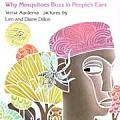 3. — Why Mosquitoes Buzz in People’s Ears, retold by Verna Aardema, illus. Leo & Diane Dillon. The fact that two people manage to illustrate picture books together so seamlessly still manages to blow my mind. The fact that they can do it and make fabulously, modern-yet-timeless-looking jungle creatures that remind me of traditional Ashanti masks rendered in neon. Aardema’s retelling is tight and pretty much flawless; cumulative folktales such as this one run the risk of becoming tedious (it’s the reason I can’t stand “This is the House that Jack Built”) but her text is justrhythmic enough to stay lively through repeat read-alouds. Bonus: the “Lion” character gives you ample reason to channel your inner James Earl Jones.
 2. — The Story of Ferdinand by Munro Leaf, illus. Robert Lawson. It’s supposed to be the #1 international bestselling children’s book of all time. It’s also the book that Jella Lepman (founder of the IBBY and the International Youth Library) translated and made 30,000 copies of to give the children of Berlin, circa 1945 (take THAT, copyright law!). If those two facts alone couldn’t convince you of this book’s merit, then keep in mind that the message of sitting down to smell the flowers instead of fighting the matadors is still pretty darn relevant today. And you know those five men in the funny hats? Still darn funny, no matter how many times you see them.
 1. — Madeline, by Ludwig Bemelmans. Okay, okay, this book has landed la place premiere spot pretty much because I have gobs of personal childhood nostalgia lumped onto it**, but really: it’s a classic, the illustrations still as fresh and sophisticated today as ever, and the text may be a bit clunky-sing-song but sticks in your brain like gum to a shoe (“To the tiger in the zoo / Madeline just said “pooh-pooh!”). The big yellow hat . . . La Tour d’Eiffel . . . that bed with a crank and the oddly triangular Miss Clavel? C’est magnifique! Even better: the illustrations contain a glaring yet easily-missed mistake that children’s book nerds (comme moi) can have fun pointing out to other children’s book nerds (it’s the secret handshake we’ve never come up with).
 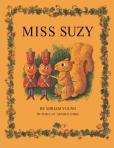 Miss Suzy by Miriam Young, illus. Arnold Lobel — it’s about a squirrel who, upon losing her home to bandits, goes to live in an abandoned dollhouse with a troop of toy soldiers. There’s just . . . SO many childhood fantasies being fulfilled in this book, I can’t begin to tell you how much I loved it as a kid. Best of all, it was reissued a few years ago in hardback, so I now have a pretty pretty copy for myself.
 The Clown of God by Tomie DePaola — Whenever I read this book, there’s a 99.99% guarantee that I’ll be crying at the end. See, it’s about this talented juggler during the Italian Renaissance, and when he grows old, nobody hires him anymore. Then on Christmas Eve he goes into a church to juggle . . . and TRUST ME it sounds STUPID in this summary, but it’s AWESOME. (*sob* I need to find a Kleenex . . . )
 The Mysterious Tadpole by Steven Kellogg — Plot: a kid’s tadpole-watching science project grows into a cheeseburger-eating Loch Ness Monster. What I love in this book is the lovely display of kid-type logic: yes, you can hide a 500-lb. monster under a carpet! And keep him in the junior high swimming pool all summer long! And nobody will notice him until they actually jump in the pool!
 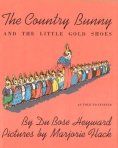 The Country Bunny and the Little Gold Shoes by DuBose Heyward, illus. Marjorie Flack — A surprisingly progressive children’s book from the 1930s, about a little brown country bunny who wishes to grow up to be the Easter Bunny. When she ends up becoming the mother of 21 children, she’s told to give up this idea — but it turns out that her skills as a good parent are what enable her to fulfill her dream. And can you believe it was penned by the same guy who wrote the book for Porgy & Bess?
 Petronella by Jay Williams, illus. Friso Henstra — Williams was concocting “fractured fairy tales” long before it was fashionable to do so. This one’s my favorite of his sadly out-of-print titles. It features a princess who must go rescue a prince in order to inherit the throne. When she does so, she realizes that the fopheaded prince isn’t nearly as good a catch as the clever wizard keeping him prisoner. My husband and I have a theory that the reason Williams’ books didn’t catch on as they should have is because they all featured the weirdly psychedelic art of Friso Henstra. However, we both have a nostalgic fondness for his illustrations today — in this book, the illustration of the wizard with an axe for a head will implant itself into your mind and never, ever leave. (Proof that we are not the only ones who feel this way: originals of this book sell for $35 on Amazon.com, while used copies of the reissue — with its more traditional-looking fairy-tale illustrations — go for $3.95. And yes, this is the only image of this book I could find.)
 The Church Mouse and its many sequels by Graham Oakley — a British import, fully loaded with that nation’s distinctive brand of humor. Featuring a colony of mice who live in an Anglican vestry and Samson the cat, “who has heard so many sermons on Christian brotherhood that he has sworn off hunting mice.” The mice are lead by the street-smart Arthur and book-smart Humphrey (both equally dimwitted) and over the course of ten-odd books, they are rousted by a gang of rats, ousted by the vicar’s hippie summer replacement, kidnapped as part of the Wartlethorpe Moon Project, finagle Samson into a television ad campaign for cat food, and spend many hours at a time sunning themselves in the graveyard and snacking on wild berries. Still popular (and in print) in the UK, this is a series worth collecting.
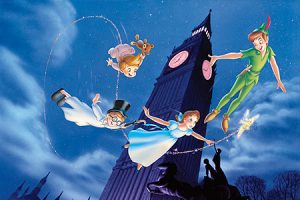 The local junior high is currently putting on a production of Peter Pan. A friend of mine has a son starring in it, and since she wasn’t able to attend herself (long story) she decided to buy and give away as many tickets as she could to show her support. Which is how I ended up with free tickets for me, Jeffrey, and Eleanor for a matinee today.
 Starring Miss Darlene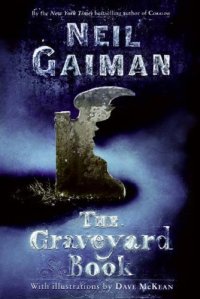



 Chains by Laurie Halse Anderson — It’s the story of a slave girl in New York City during the American Revolution. Many people are saying that this is a lock for the win, but the competition is fierce. I personally thought the protagonist’s voice was a little unconvincing, and the plot was way predictable, but it’s very good nonetheless, and it’s likely your children (if you have any) will be required to read it in school.
  The Underneath by Kathy Appelt — In Plot 1, kittens and a hound dog are caught in the clutches of a drunken, abusive owner. In Plot 2, ancient Native Americans interact with a supernatural shape-shifting snake. The two tales intersect in a bevy of shimmering, if sometimes repetitive, prose. I call it the weirdest story you’ll ever love. Others call it tedious and too dark for kids. Read it and decide for yourself, eh?
 The Porcupine Year by Louise Erdrich — The third book in the acclaimed Birchbark House series, tracking the forced migration of an Ojibwe family, circa 1858. Sounds sad, but Erdrich’s account of Omakayas’ day-to-day life is as uplifting, lovely, and funny as anything else you’ll read this year.
  After Tupac and D Foster by Jacqueline Woodson — Two best friends growing up with comfortable but strict families in 1990s Queens. Enter a foster child with all the freedom in the world, triggering a search for personal identity and maturity. Yeah, most of Woodson’s novels are difficult to summarize nicely. You know why? Because her writing is quietly brilliant, that’s why.
 My One Hundred Adventures by Polly Horvath — Horvath’s books have been described as “magic realism without the magic,” which is pretty apt. This tale of a 12 year old girl’s last summer of childhood is packed with zany adventures but reads like poetry. It includes a purple air balloon heist, a psychic evangelical minister, and someone described only as “the clotheshanger man.” And yet I get misty-eyed just thinking about it. Huh.
 The Graveyard Book by Neil Gaiman — It’s certainly the biggest crowd-pleaser on this list, and yet may be exempt from eligibility owing to a technicality (one chapter of the book began as a previously published short story, which is Against The Rules, meh). If you haven’t heard my raves about it before, it’s like The Jungle Book, only it’s about an orphaned being raised by ghosts instead of animals. And it features hilarious, Cockney-spouting ghouls and the most loveable vampire ever. ‘Nuff said.
 Masterpiece by Elise Broach — James is a boy who lives in Manhattan; Marvin is the black beetle who lives in his wall. Marvin also happens to be something of an art prodigy, and when he begins leaving beautiful, miniature ink drawings on James’ desk, it attracts the attention of adults, teachers — and eventually the Metropolitan Museum of Art. This is one of those broad-broad-appeal books, like The Cricket in Times Square crossed with From the Mixed-Up Files of Mrs. Basil E. Frankweiler. However, it has kind of a weirdo moment with a turtle tank (yes, you read that correctly), so we shall see.
 Alvin Ho: Allergic to Girls, School, and Other Scary Things by Leonore Look. A novel about a 2nd grader facing a rather crippling shyness that is peppered with imaginitive wordplay and funny, funny situations. (Funny. Funny. Funny.) Alvin’s voice is clever without being precocious, and smart while still authentically child-like. (This kind of writing is harder than you think.) However, funny books and novels for younger readers rarely win awards, so We Shall See.
  The Trouble Begins at 8 by Sid Fleischmann — A rather cunning biography of Mark Twain, written in the jaw-droppingly clever style of Twain himself. You’d think this would be grating, but instead it’s gratifying. Fleischmann’s display of Sam Clemens’ metamorphosis into Mark Twain is downhome brilliant. However — there’s been some talk about whether or not the period caricatures of Twain Fleischmann used for to illustrate the book may confuse some readers. I think kids are smart enough to get the joke, but the award committee may not feel that way.
 The Penderwicks on Gardam Street by Jeanne Birdsall — The second book in Birdsall’s contemporary riff off of Little Women, in which the four Penderwick sisters attempt to thwart their widower father’s attempts to re-enter the dating scene. Their plan involves an elaborate web of lies, Latin insults, a play about Aztecs, frequent appearances by the high school football team, and Marianne Dashwood. Did I mention the funny? No? Well, this book has it in spades. Usually I tend to back off from books described as “charmingly old-fashioned,” but this book’s writing is so solid that I’m still smiling thinking about it — and I read it six months ago.
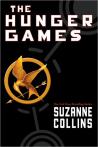 The Hunger Games by Suzanne Collins — This book may seem out of place in a list of rather thunderous “emotional books,” but a fast-paced action novel requires a different set of gears than the realistic coming-of-age novel. This book is about both wiley and whiney teens forced to fight to the death in a national park. And despite that, it isn’t laughably cheesy, but a rather ripping good read. Tell me that ain’t award-worthy, punk.
 Diamond Willow by Helen Frost — in addition to the token funny book, non-fiction, and book for younger readers, every good Newbery prediction list should have its token book of poetry. Or at the least, a novel-in-verse, which is what the lovely Diamond Williow is. Frost has concocted a novel in concrete poems — or “shape” poems, embedding in each a second, smaller poem that reflects the thoughts or emotional state of the protagonist. Oh, and it has sled dogs racing through the Alaskan interior, and plays with the idea of animals being the characters’ ancestors. So, it could be a wild card.
 Casa Camisas