Tomorrow morning, the American Library Association will give out its annual Youth Media Awards, otherwise known as “the children’s literature Oscars.” There are a bevy of awards, and there’s a grand flurry of predictions that emerge in the kidlitosphere this time of year. BUT — the one that gets the most attention, the most press, and therefore the most prestige, is the Newbery Award. It’s supposed to be given to the year’s most “distinguished” contribution to children’s literature, but that usually translates to “best novel.” It’s fun to try and read everything that might be a contender, but because the award committee is famously secretive, it’s always unpredictable. Here are some of my personal ideas of what might win (in no particular order):
 Chains by Laurie Halse Anderson — It’s the story of a slave girl in New York City during the American Revolution. Many people are saying that this is a lock for the win, but the competition is fierce. I personally thought the protagonist’s voice was a little unconvincing, and the plot was way predictable, but it’s very good nonetheless, and it’s likely your children (if you have any) will be required to read it in school.
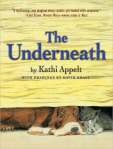
 The Underneath by Kathy Appelt — In Plot 1, kittens and a hound dog are caught in the clutches of a drunken, abusive owner. In Plot 2, ancient Native Americans interact with a supernatural shape-shifting snake. The two tales intersect in a bevy of shimmering, if sometimes repetitive, prose. I call it the weirdest story you’ll ever love. Others call it tedious and too dark for kids. Read it and decide for yourself, eh?
 The Porcupine Year by Louise Erdrich — The third book in the acclaimed Birchbark House series, tracking the forced migration of an Ojibwe family, circa 1858. Sounds sad, but Erdrich’s account of Omakayas’ day-to-day life is as uplifting, lovely, and funny as anything else you’ll read this year.
 After Tupac and D Foster by Jacqueline Woodson — Two best friends growing up with comfortable but strict families in 1990s Queens. Enter a foster child with all the freedom in the world, triggering a search for personal identity and maturity. Yeah, most of Woodson’s novels are difficult to summarize nicely. You know why? Because her writing is quietly brilliant, that’s why.
 My One Hundred Adventures by Polly Horvath — Horvath’s books have been described as “magic realism without the magic,” which is pretty apt. This tale of a 12 year old girl’s last summer of childhood is packed with zany adventures but reads like poetry. It includes a purple air balloon heist, a psychic evangelical minister, and someone described only as “the clotheshanger man.” And yet I get misty-eyed just thinking about it. Huh.
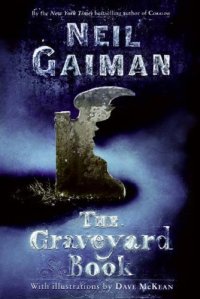
 The Graveyard Book by Neil Gaiman — It’s certainly the biggest crowd-pleaser on this list, and yet may be exempt from eligibility owing to a technicality (one chapter of the book began as a previously published short story, which is Against The Rules, meh). If you haven’t heard my raves about it before, it’s like The Jungle Book, only it’s about an orphaned being raised by ghosts instead of animals. And it features hilarious, Cockney-spouting ghouls and the most loveable vampire ever. ‘Nuff said.
 Masterpiece by Elise Broach — James is a boy who lives in Manhattan; Marvin is the black beetle who lives in his wall. Marvin also happens to be something of an art prodigy, and when he begins leaving beautiful, miniature ink drawings on James’ desk, it attracts the attention of adults, teachers — and eventually the Metropolitan Museum of Art. This is one of those broad-broad-appeal books, like The Cricket in Times Square crossed with From the Mixed-Up Files of Mrs. Basil E. Frankweiler. However, it has kind of a weirdo moment with a turtle tank (yes, you read that correctly), so we shall see.
 Alvin Ho: Allergic to Girls, School, and Other Scary Things by Leonore Look. A novel about a 2nd grader facing a rather crippling shyness that is peppered with imaginitive wordplay and funny, funny situations. (Funny. Funny. Funny.) Alvin’s voice is clever without being precocious, and smart while still authentically child-like. (This kind of writing is harder than you think.) However, funny books and novels for younger readers rarely win awards, so We Shall See.
 The Trouble Begins at 8 by Sid Fleischmann — A rather cunning biography of Mark Twain, written in the jaw-droppingly clever style of Twain himself. You’d think this would be grating, but instead it’s gratifying. Fleischmann’s display of Sam Clemens’ metamorphosis into Mark Twain is downhome brilliant. However — there’s been some talk about whether or not the period caricatures of Twain Fleischmann used for to illustrate the book may confuse some readers. I think kids are smart enough to get the joke, but the award committee may not feel that way.
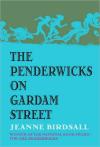 The Penderwicks on Gardam Street by Jeanne Birdsall — The second book in Birdsall’s contemporary riff off of Little Women, in which the four Penderwick sisters attempt to thwart their widower father’s attempts to re-enter the dating scene. Their plan involves an elaborate web of lies, Latin insults, a play about Aztecs, frequent appearances by the high school football team, and Marianne Dashwood. Did I mention the funny? No? Well, this book has it in spades. Usually I tend to back off from books described as “charmingly old-fashioned,” but this book’s writing is so solid that I’m still smiling thinking about it — and I read it six months ago.
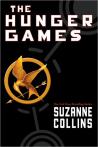 The Hunger Games by Suzanne Collins — This book may seem out of place in a list of rather thunderous “emotional books,” but a fast-paced action novel requires a different set of gears than the realistic coming-of-age novel. This book is about both wiley and whiney teens forced to fight to the death in a national park. And despite that, it isn’t laughably cheesy, but a rather ripping good read. Tell me that ain’t award-worthy, punk.
 Diamond Willow by Helen Frost — in addition to the token funny book, non-fiction, and book for younger readers, every good Newbery prediction list should have its token book of poetry. Or at the least, a novel-in-verse, which is what the lovely Diamond Williow is. Frost has concocted a novel in concrete poems — or “shape” poems, embedding in each a second, smaller poem that reflects the thoughts or emotional state of the protagonist. Oh, and it has sled dogs racing through the Alaskan interior, and plays with the idea of animals being the characters’ ancestors. So, it could be a wild card.
I’ll chime in tomorrow with my thoughts about the real winners — I’m so excited, I can’t wait!

 The children’s book author Jon Sciezska once wrote that boys and fire are like iron and magnets: no matter what you do, somehow they will always find each other.
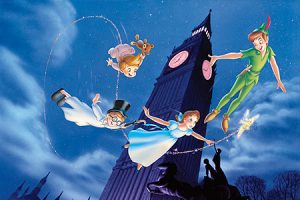 The local junior high is currently putting on a production of Peter Pan. A friend of mine has a son starring in it, and since she wasn’t able to attend herself (long story) she decided to buy and give away as many tickets as she could to show her support. Which is how I ended up with free tickets for me, Jeffrey, and Eleanor for a matinee today.
 Starring Miss Darlene
 For Family Home Evening this past Monday, we decided to sit down with the kids and plan out our garden for the upcoming year. Brian and I are quite excited — the yard behind our house is huge, and Utah, with its lack of mold spores, fine earth, and sunny weather, is ideal for gardening (that is, if you can get the water).



 Casa Camisas